How Developers Use Screenshots for AI Workflows
See how developers use screenshots with AI tools for debugging, UI feedback, bug reports, and visual context that text alone cannot capture quickly.
Developers are using screenshots with AI tools more often because a screenshot can communicate a state faster than a paragraph.
This is especially true when the problem is visual:
- spacing issues
- broken layouts
- unexpected UI states
- form errors
- confusing flows
- visual regressions
Instead of describing a screen from scratch, a developer can capture it, annotate it, and hand it to an AI tool with a direct question.
This guide is for developers who use screenshots as visual context for debugging, UI feedback, documentation, or AI prompts. The goal is not just to capture the screen; it is to keep the screenshot close enough to paste, mark up, rename, or drag into the next tool while the problem is still fresh.
Why screenshots work well with AI
Text is great for logic. Screenshots are better for visual state.
A screenshot can show:
- layout relationships
- missing elements
- unexpected placement
- styling mismatches
- workflow context
That makes it easier to ask practical questions like:
- Why does this layout feel off?
- What is the likely bug here?
- How should I rewrite this UI?
- What would you improve about this onboarding step?
Common developer screenshot workflows
UI debugging
A developer captures a broken component and asks an AI tool to identify likely causes or suggest CSS and layout fixes.
Product iteration
A developer shares a screen state and asks for copy, hierarchy, or interaction feedback.
QA follow-up
Instead of pasting a vague bug description, the developer annotates the screenshot and asks the model to draft a clearer issue summary.
Documentation
Screenshots help when writing internal docs, release notes, setup guides, or support instructions.
Why the post-capture workflow matters
In AI workflows, the bottleneck is often not the capture shortcut. It is everything after that:
- finding the file
- pasting it into the right tool
- renaming it if you want to keep it
- annotating it fast enough to preserve context
If the screenshot vanishes into Finder right away, the flow breaks.
That is why developers gravitate toward tools that keep screenshots visible and let them act immediately.
What makes a screenshot useful for AI
The best screenshots for AI are:
- focused
- lightly annotated
- paired with a clear request
They should not try to show everything. They should show enough to answer one question well.
For example:
- "Why is this card alignment uneven on mobile?"
- "Rewrite the copy in this modal to be clearer."
- "Suggest a bug report title and summary from this screen."
Those are much easier to answer when the screenshot is tight and intentional.
Where CommandShot fits for developers
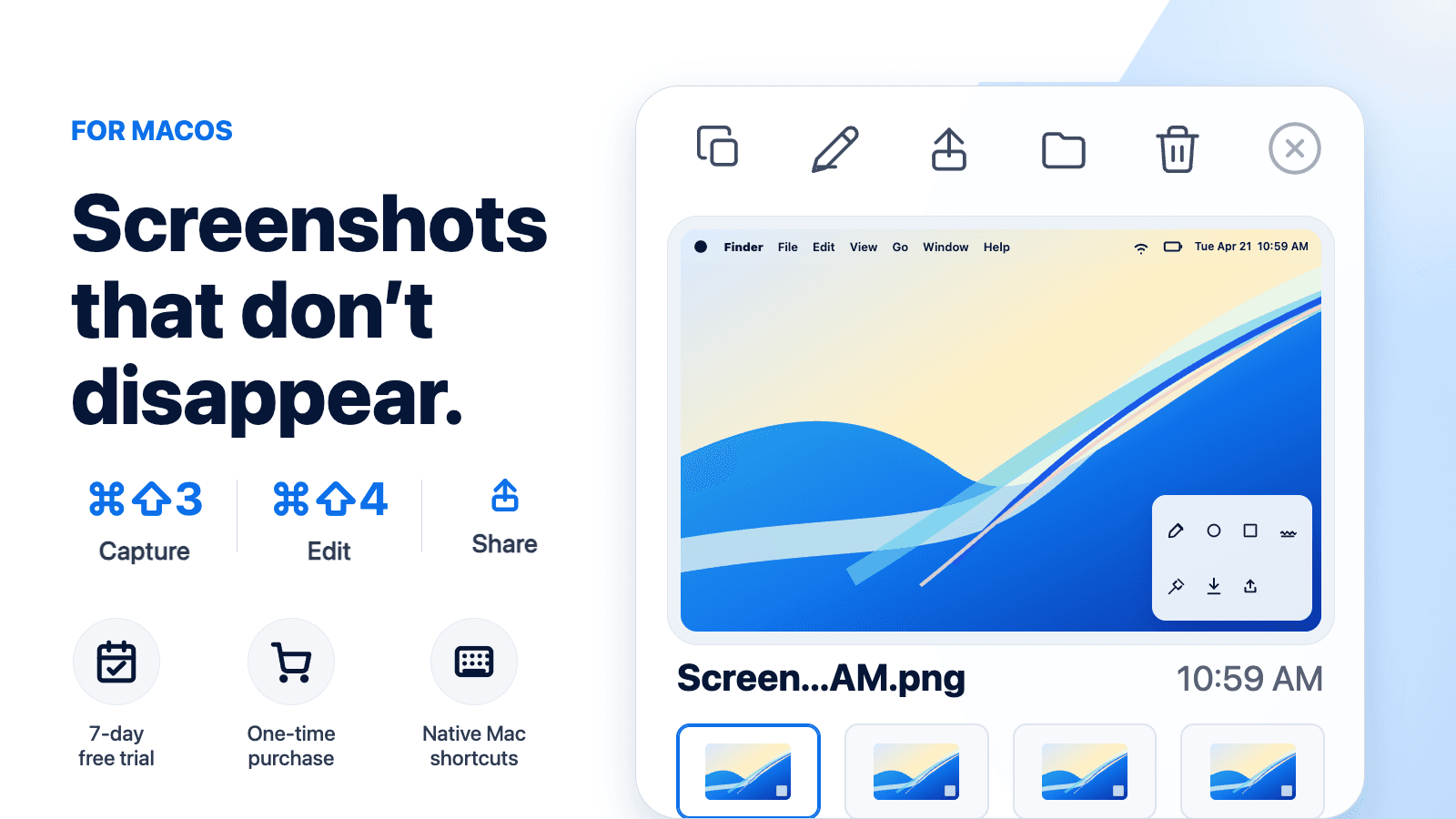
CommandShot is useful in this workflow because it stays aligned with the shortcuts developers already use. The improvement is after capture:
- screenshots stay visible
- copying and pasting is immediate
- quick renaming happens inline
- editing tools are close by
- multiple screenshots can be dragged into chat tools
That matters when you are bouncing between the app, terminal, browser, issue tracker, and AI assistant all day.
Best practices for developers
If you use screenshots with AI often, these habits help:
- Prefer partial screenshots over full desktop captures.
- Annotate the exact issue if the screen has multiple possible focal points.
- Ask one concrete question per screenshot.
- Keep the screenshot workflow close to where you already work.
The last point is easy to underestimate. Small delays compound quickly in debugging and iteration loops.
Final takeaway
Developers use screenshots in AI workflows because screenshots carry visual context that text alone is slow to recreate.
The faster the path from capture to paste, the more useful that workflow becomes. That is why improving the post-screenshot flow has become just as important as the capture shortcut itself.