How to Annotate Screenshots on Mac
Learn the fastest ways to mark up screenshots on Mac with arrows, highlights, text, and shapes so your screenshots communicate clearly.
Taking a screenshot is easy on Mac. Making that screenshot understandable is the real job.
If you send screenshots to teammates, clients, or AI tools, annotation matters. A plain screenshot often leaves too much room for interpretation. A marked-up screenshot tells the viewer exactly what to notice.
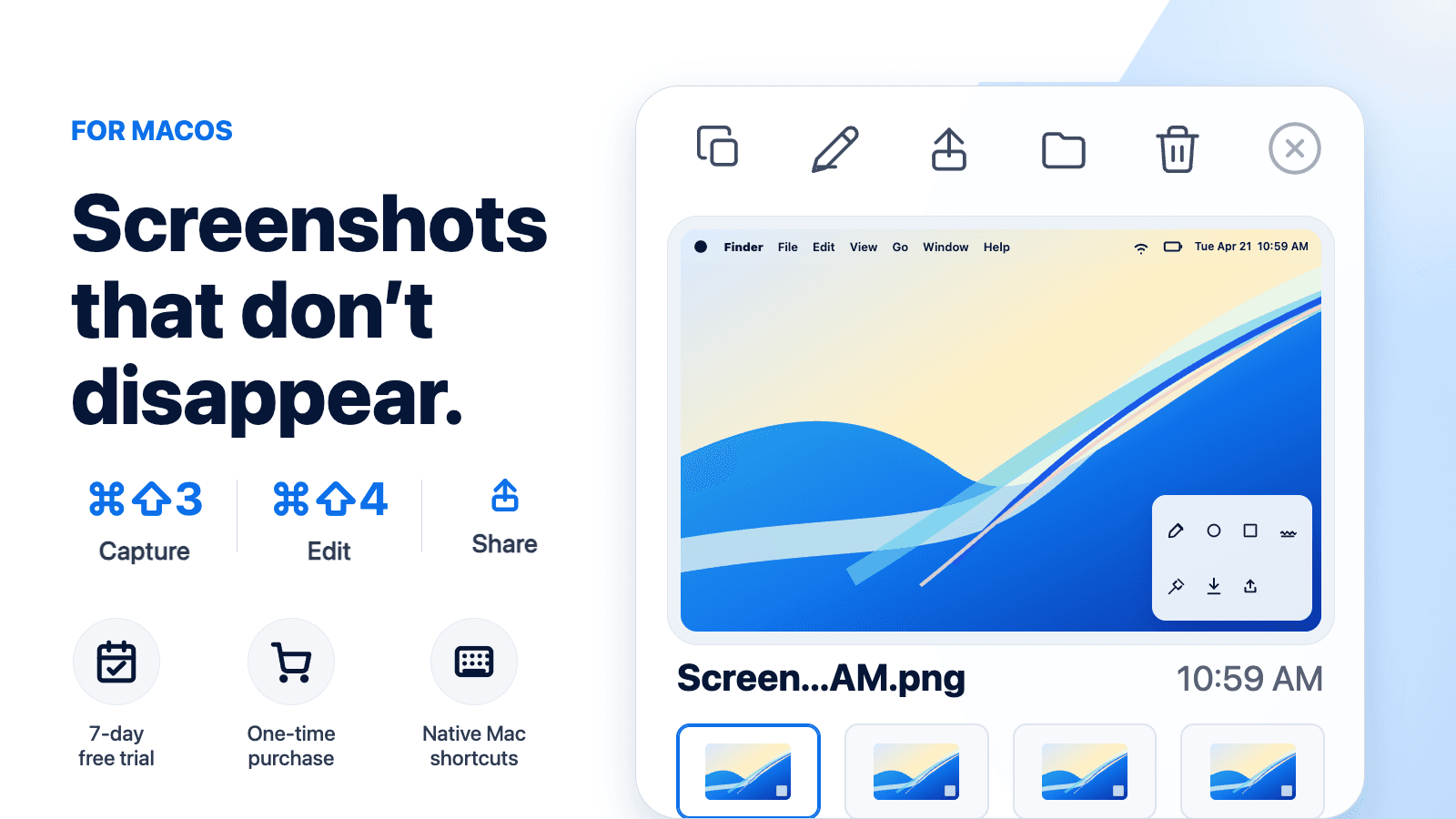
Use this guide when you need quick markup, not a full design app. It explains the Mac options for arrows, highlights, text, and shapes, then shows why a post-capture workflow like CommandShot helps when you want to annotate and share before the screenshot disappears into a folder.
Why annotation matters
Annotations add direction. They help answer questions like:
- What is wrong here?
- Which part should I look at?
- What changed?
- Where is the bug?
- What feedback matters most?
Without annotations, screenshots often create follow-up questions. With annotations, screenshots become clear instructions.
Common screenshot annotations
The most useful annotation tools are simple:
- arrows to point at a problem
- highlights to emphasize a region
- rectangles or circles to frame an area
- text labels to add context
- borders or overlays to separate important content
You do not need a complicated design tool for this. You just need a quick way to add the minimum explanation.
Built-in ways to annotate screenshots on Mac
macOS gives you a few options:
Preview
You can open a screenshot in Preview and use markup tools there. This works, but it adds a few extra steps if you are moving quickly.
Screenshot thumbnail markup
When the floating screenshot thumbnail appears, you can click it and open the markup interface. That can be useful for occasional edits, but the thumbnail is easy to miss if you are multitasking.
Third-party tools
If screenshots are part of your daily workflow, dedicated screenshot tools are usually faster because they keep the screenshot accessible and give you editing tools immediately.
What makes screenshot annotation fast
The best annotation workflow has three traits:
1. Low friction
You should not have to open multiple apps, browse for files, or wait for a heavy editor to launch.
2. Fast tools
The most common tools should be obvious and quick to use: arrow, highlight, text, rectangle, circle.
3. Immediate output
After editing, you should be able to save, copy, paste, or share right away.
That is why dedicated tools feel better than generic image editors for screenshot work.
How to annotate screenshots clearly
A good annotation does not overwhelm the image. It guides attention.
Use these rules:
- make one point per annotation cluster
- avoid covering the important UI
- use short labels, not paragraphs
- prefer one arrow over five
- crop first if the screenshot contains too much noise
In other words, annotate to reduce ambiguity, not to decorate.
Best use cases for annotated screenshots
Annotated screenshots are especially useful for:
- bug reports
- design reviews
- QA handoffs
- async product feedback
- support instructions
- AI prompts that need visual context
In all of those cases, clarity is more valuable than visual polish.
Where CommandShot fits
CommandShot includes a built-in screenshot editor with the tools people actually use most:
- arrows
- highlights
- rectangles
- circles
- text
- border tools
- custom font sizes
- shape overlays
The point is not to replace professional design software. It is to make screenshot annotation fast enough that you actually do it every time it helps.
Final takeaway
To annotate screenshots on Mac, you can use Preview or the built-in markup flow. If you only annotate occasionally, that may be enough.
If screenshots are part of how you communicate every day, the better solution is a workflow that keeps screenshots visible and editable the moment they are captured. That is where annotation stops feeling like extra work and starts becoming part of the capture itself.