How to Record Your Screen on Mac
Use the built-in Mac screen recording shortcut, choose the right recording area, and know when a screenshot is better than a video.
macOS includes a built-in way to record your screen. You do not need a separate app for basic screen recordings, walkthroughs, or quick visual explanations.
The key is knowing when to record and when a screenshot is enough.
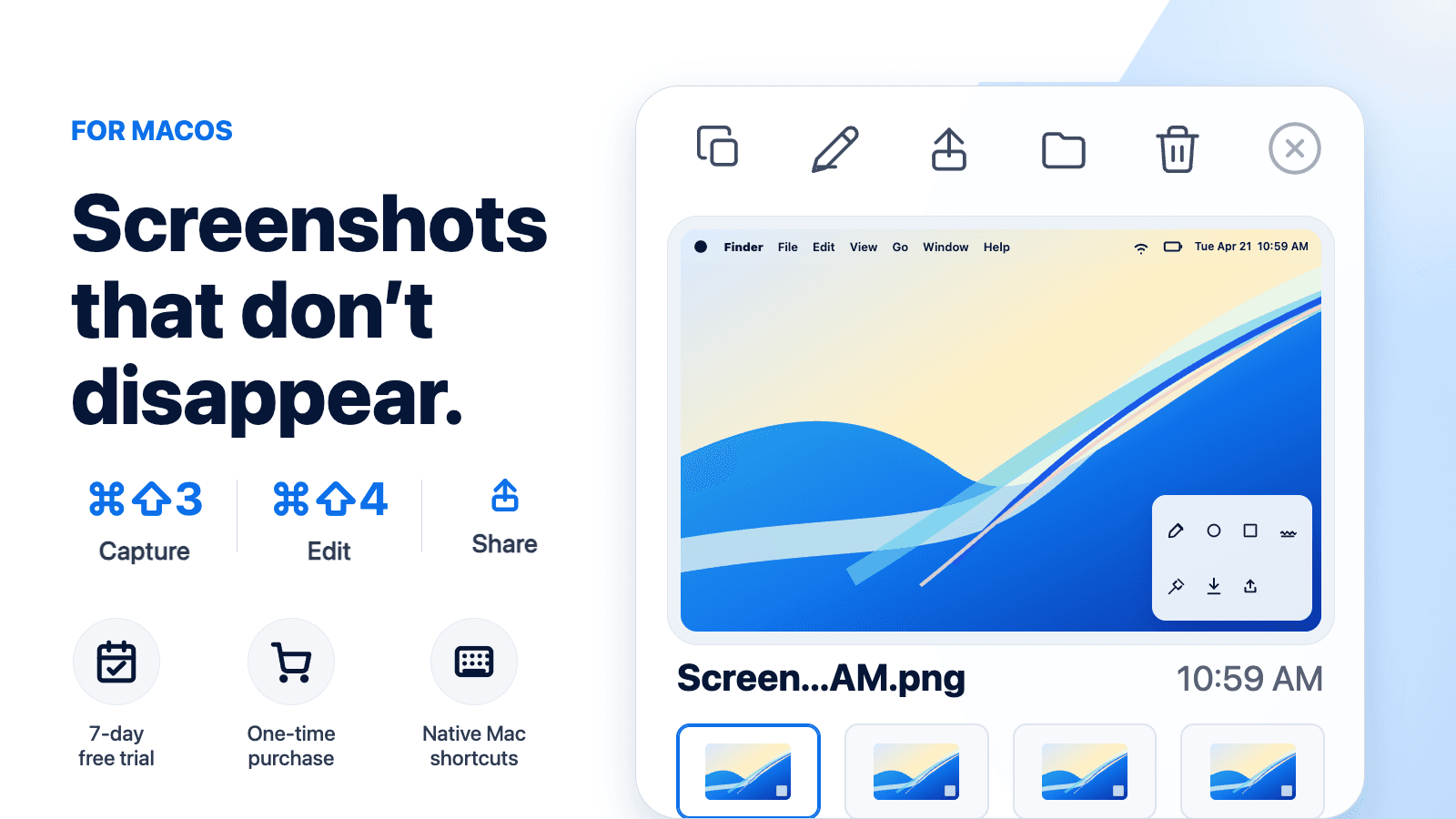
This page is for Mac users deciding between a video capture and a still screenshot. If the issue is static, a focused screenshot is usually faster to review, annotate, and share; CommandShot supports that screenshot side of the workflow by keeping recent captures ready for the next action.
How to start a screen recording
- Press
Command + Shift + 5. - Choose
Record Entire ScreenorRecord Selected Portion. - Click
Record. - Use the stop button in the menu bar when you are done.
The recording saves to the location selected in the Screenshot toolbar.
Full-screen vs selected-portion recording
Use full-screen recording when the viewer needs to understand the whole desktop or a complete app flow.
Use selected-portion recording when you want to show:
- one feature
- one form
- one bug
- one settings panel
- one browser region
Selected recordings are usually easier to watch because they remove distractions.
Where recordings are saved
Press Command + Shift + 5, then click Options. The Save To setting controls both screenshots and screen recordings.
If you cannot find the recording afterward, search Finder for "Screen Recording" and sort by newest.
When a screenshot is better than a recording
A recording is useful for motion. A screenshot is better for static information.
Use a screenshot for:
- error messages
- UI layout feedback
- documentation
- support tickets
- AI prompts
- visual proof of a state
Use a screen recording for:
- steps that happen over time
- hover states
- animations
- multi-step bugs
- walkthroughs
If a screenshot can explain the issue, it is usually faster for everyone.
Make recordings easier to understand
Before recording, clean up your screen:
- close unrelated windows
- zoom in if text is small
- select only the needed area
- avoid showing private information
- keep the recording short
Most useful screen recordings are under one minute.
How screenshots and recordings work together
For many work situations, the best handoff is a screenshot plus a short note. If motion matters, add a recording.
CommandShot focuses on the screenshot side of that workflow: keeping recent captures visible and ready to copy, edit, rename, drag, or share.
Final takeaway
Use Command + Shift + 5 to record your screen on Mac. Choose selected-portion recording when possible, and use screenshots when the issue does not require motion.