How to Screenshot a Window on Mac
Capture a single Mac window without showing your whole desktop, plus tips for cleaner window screenshots and faster sharing.
Capturing one window is one of the cleanest ways to take a screenshot on Mac. It removes your desktop, other apps, notifications, and unrelated clutter so the person receiving the screenshot sees only the window that matters.
This is especially useful for bug reports, support replies, product feedback, documentation, and design review.
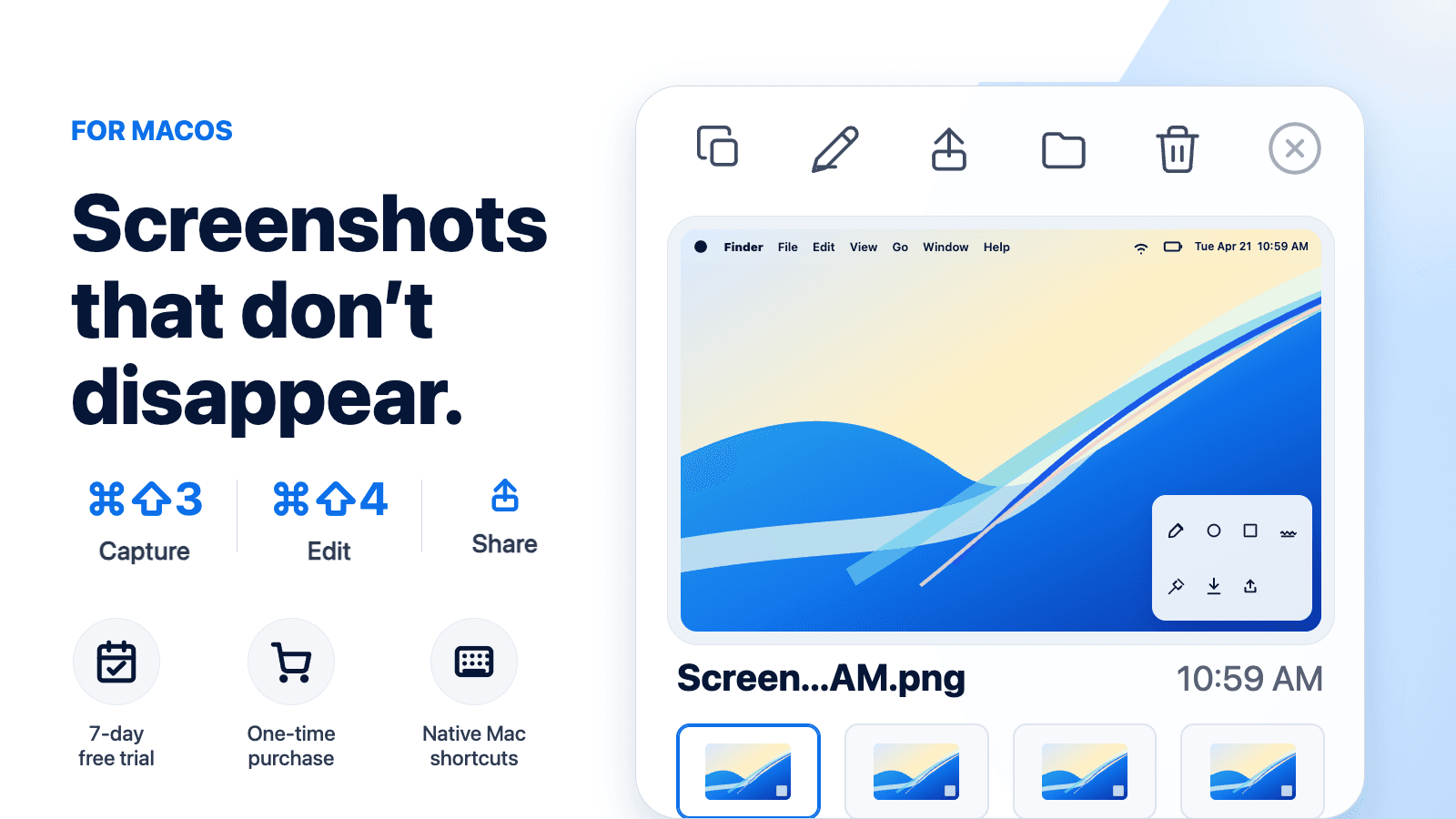
This guide is for Mac users who need a clean app-window capture without exposing the rest of the desktop. Once the window screenshot is taken, CommandShot can keep it ready so you can copy, edit, rename, drag, share, or delete the image before the workflow moves on.
The shortcut for a window screenshot
Use this sequence:
- Press
Command + Shift + 4. - Press
Space. - Hover over the window you want.
- Click the window.
macOS captures that window and saves it to your selected screenshot location.
When window screenshots are better
Window screenshots are best when the whole app state matters but the rest of your screen does not.
Use them for:
- settings windows
- app dialogs
- error popups
- browser windows
- product screens
- onboarding flows
- support documentation
If the issue is only one small part of a window, use Command + Shift + 4 instead and select the exact area.
How to copy a window screenshot
If you want to copy the window screenshot instead of saving it:
- Press
Control + Command + Shift + 4. - Press
Space. - Click the window.
- Paste with
Command + V.
That is useful when the screenshot is temporary and you only need to paste it into a message, document, or AI chat.
Where the screenshot goes
Window screenshots usually save to the Desktop unless you changed the location. Press Command + Shift + 5, click Options, and check Save To.
If you are not sure where screenshots are landing, read where screenshots go on Mac.
How to make window screenshots more useful
Before you send a window screenshot, check:
- Is the window large enough to read?
- Is the important state visible?
- Is private information hidden?
- Would a short annotation help?
- Should the filename be renamed before sharing?
The cleaner the screenshot is, the less explaining you have to do afterward.
Why the post-capture workflow matters
The Mac shortcut captures the window well. The next step can still be awkward if you need to find the file, rename it, or edit it.
CommandShot helps after capture by keeping recent screenshots visible and ready to copy, rename, drag, edit, share, or delete.
Final takeaway
Use Command + Shift + 4, then Space, to screenshot a single Mac window. It is one of the fastest ways to create a clean, focused screenshot without showing the rest of your desktop.