How to Screenshot Part of Your Screen on Mac
Use the Mac partial screenshot shortcut to capture exactly the area you need, with tips for cleaner screenshots and less editing afterward.
If you only need part of your screen, the fastest Mac shortcut is Command + Shift + 4.
This is one of the most useful screenshot shortcuts in macOS because it lets you capture just the region that matters. That means less cropping, less editing, and better screenshots for communication.
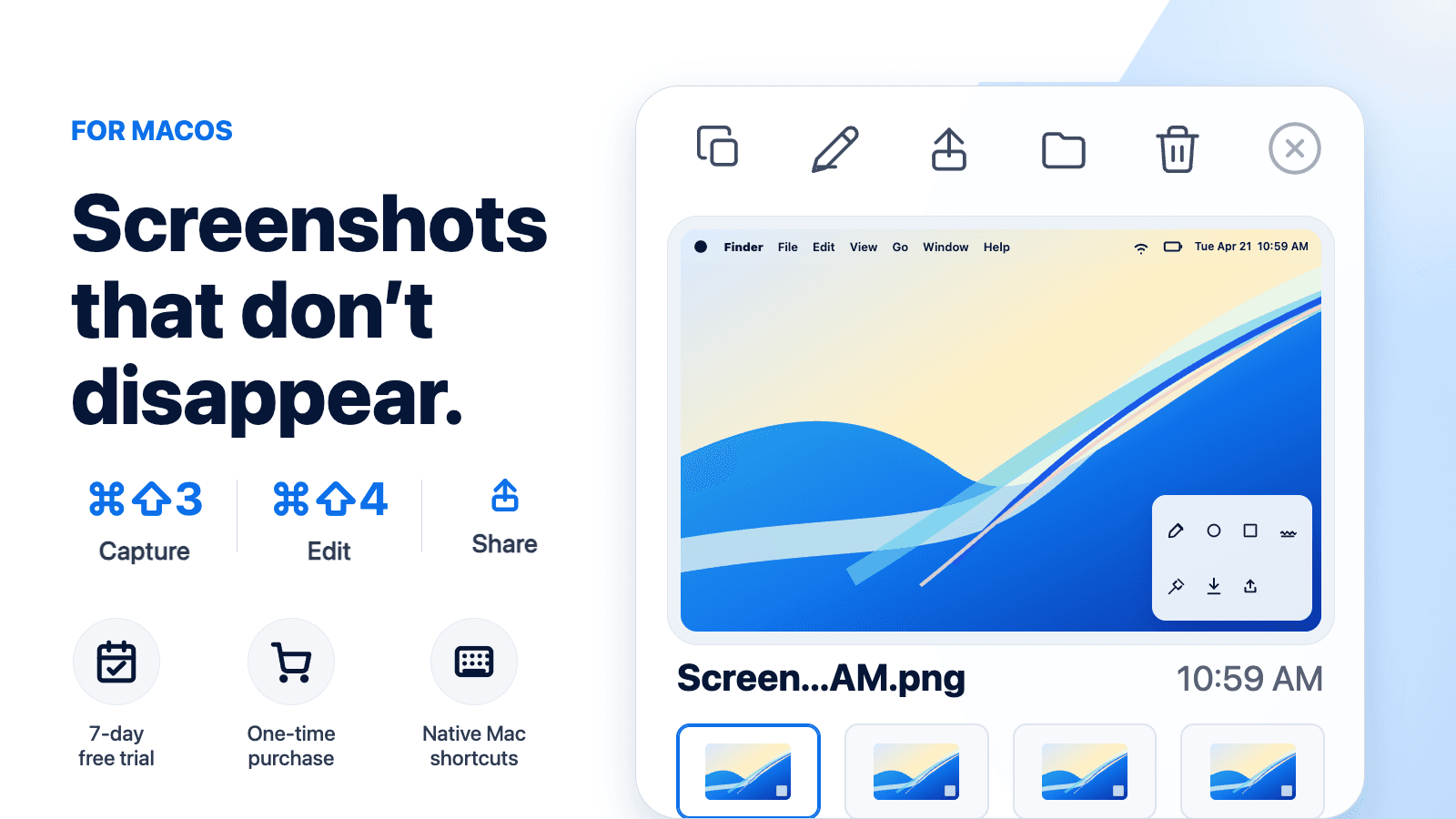
This page is for focused screenshots: bugs, UI details, support examples, AI prompts, and anything where the whole desktop would add noise. Use the shortcut to capture the right area, then use CommandShot if you need the selected screenshot to stay available for quick copy, markup, drag, rename, share, or cleanup.
The shortcut
Press Command + Shift + 4.
Your cursor will change so you can select a region on screen. Click and drag over the area you want to capture, then release. macOS saves the screenshot immediately.
That is the entire workflow.
Why partial screenshots are better for most work
A full-screen screenshot often includes too much:
- tabs and browser chrome
- unrelated windows
- the menu bar
- the desktop background
- personal or distracting details
A partial screenshot keeps the focus on the actual issue, design, message, or app state you want someone to see.
This is especially useful when you are:
- reporting a bug
- asking for help
- showing a design issue
- capturing UI for documentation
- sending screenshots to AI tools
Tips for getting a cleaner partial screenshot
1. Decide the subject before you drag
Before you start selecting, know what you want the screenshot to explain. Are you showing the error message, the whole component, or the space around it?
That helps you include enough context without capturing the whole screen.
2. Leave a little breathing room
Do not crop so tightly that the screenshot becomes confusing. A few extra pixels around the important element can help someone understand where they are looking.
3. Remove obvious noise
If you can close a menu, hide a cursor, or clear a personal notification first, do it. A clean screenshot is easier to read.
4. Capture once, annotate once
If you know you will need arrows, highlights, or text, capture the right area first. Good framing reduces how much editing you need later.
How to capture a window instead
If you want a whole app window rather than a freeform region, press Command + Shift + 4, then tap the Space bar.
That changes the behavior from region selection to window capture. Hover over the window you want, then click.
Use this when:
- the window itself is the unit you want to share
- you want clean edges
- a manual drag would be slower
What to do after the screenshot is taken
This is where many Mac users lose time.
You capture the right region, but then you still need to:
- copy it
- rename it
- paste it into another app
- edit it
- find it later
macOS handles the capture well. The post-capture workflow is where it gets clumsy.
If you take partial screenshots often, a tool like CommandShot helps because it keeps the screenshot visible instead of letting it disappear into Finder right away.
When to use partial screenshots instead of full-screen captures
Use partial capture if the screenshot is meant to communicate one thing clearly.
That includes:
- one bug
- one message
- one screen state
- one UI element
- one instruction step
Use full-screen capture only when the broader environment matters.
Final takeaway
To screenshot part of your screen on Mac:
- Press
Command + Shift + 4. - Click and drag over the area you want.
- Release to capture it.
That is the best default screenshot shortcut for focused communication. It keeps your screenshot smaller, clearer, and easier to use everywhere from bug reports to AI prompts.