How to Take Screenshots for Bug Reports
Create better bug report screenshots by capturing the right state, showing enough context, and annotating the issue so engineers can act faster.
A screenshot can make a bug report dramatically easier to understand, but only if the screenshot is taken with intent.
A weak bug report screenshot usually creates more questions:
- What am I supposed to notice?
- Which screen is this?
- Is the issue the spacing, the copy, the state, or the missing element?
A strong screenshot reduces all of that.
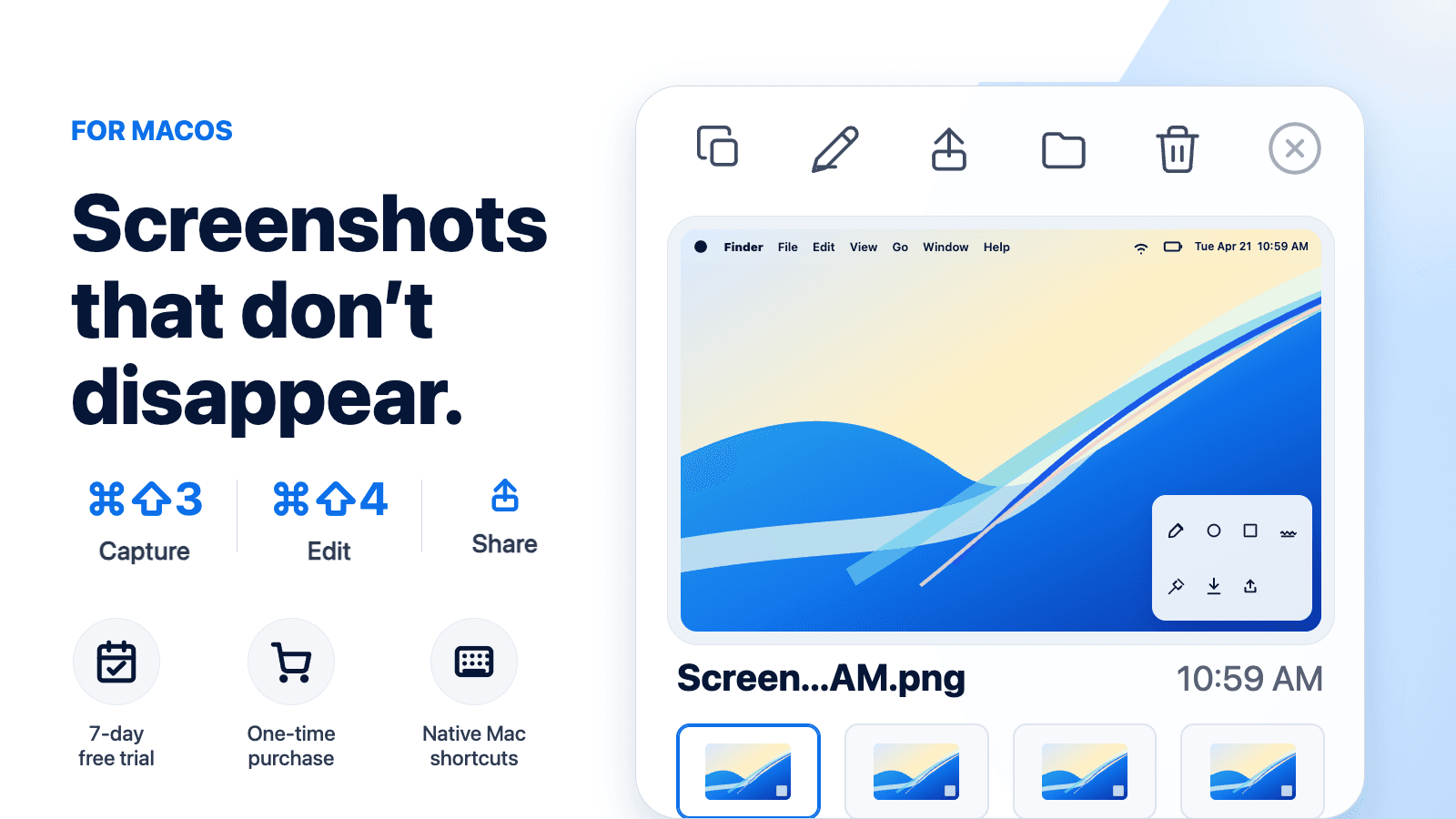
This page is for anyone turning a visual problem into a bug report someone else can act on. Capture the right state, mark the exact issue, and use CommandShot when you need the screenshot ready to annotate, rename, drag, or paste into the tracker before you lose the debugging context.
What a screenshot should do in a bug report
The screenshot should help the reader answer three questions fast:
- What is wrong?
- Where is it wrong?
- How much context do I need to understand it?
If the image does not answer those questions, the report is going to create follow-up work.
Capture the right level of context
The best bug report screenshot is rarely the entire screen and rarely an ultra-tight crop.
You want enough surrounding context to identify:
- the app or screen
- the component or area
- the state of the UI
But you do not want unrelated details that pull attention away from the issue.
In practice, Command + Shift + 4 is usually the best shortcut for bug report screenshots because it lets you focus on the relevant area.
Annotate the issue directly
If the problem is not obvious in one second, annotate it.
Good annotations include:
- an arrow to the problem
- a highlight around the broken region
- a short note like "misaligned button" or "missing error state"
Do not assume the reader will notice the same thing you noticed immediately.
Match the screenshot to the bug type
Different bugs need different screenshot styles.
Layout bugs
Show spacing, alignment, or overflow clearly. Include nearby elements so the relationship is obvious.
Copy bugs
Crop tightly enough that the incorrect text stands out, but keep enough surrounding UI to show where it appears.
State bugs
Include the full component or flow state, not just the broken message or button.
Visual regressions
If possible, include a comparison or annotate what changed.
Pair the screenshot with useful text
A screenshot is part of a bug report, not the whole report.
Also include:
- expected behavior
- actual behavior
- reproduction steps
- environment details if relevant
The screenshot supports the report. It does not replace it.
Why screenshot handling slows bug reporting down
Many teams take the screenshot quickly and lose time immediately after:
- the file disappears
- Finder opens
- the filename is useless
- annotation takes extra steps
- upload into the issue tracker is slower than it should be
That friction seems minor until it happens every day.
A better bug report screenshot workflow
An efficient flow looks like this:
- Capture the issue with
Command + Shift + 4. - Annotate the screenshot if the issue is not instantly obvious.
- Rename it if you will need to reference it later.
- Paste or drag it into the bug tracker immediately.
The faster that happens, the better the bug report usually is because the context is still fresh.
Final takeaway
Good screenshots make bug reports easier to triage because they remove ambiguity.
Capture the right amount of context, annotate what matters, and make sure the screenshot is easy to act on right after capture. That is the difference between "there is a problem somewhere on this screen" and "here is the issue, here is where it is, and here is what to fix."