Mac Screenshot Shortcuts Cheat Sheet
A clear cheat sheet for every Mac screenshot shortcut, including full-screen captures, selected areas, windows, clipboard screenshots, and the Screenshot toolbar.
Mac screenshot shortcuts are easy to learn, but they are also easy to half-remember. Most people know one or two shortcuts and then guess when they need a window capture, clipboard capture, or screen recording.
This cheat sheet covers the shortcuts worth knowing, plus when to use each one.
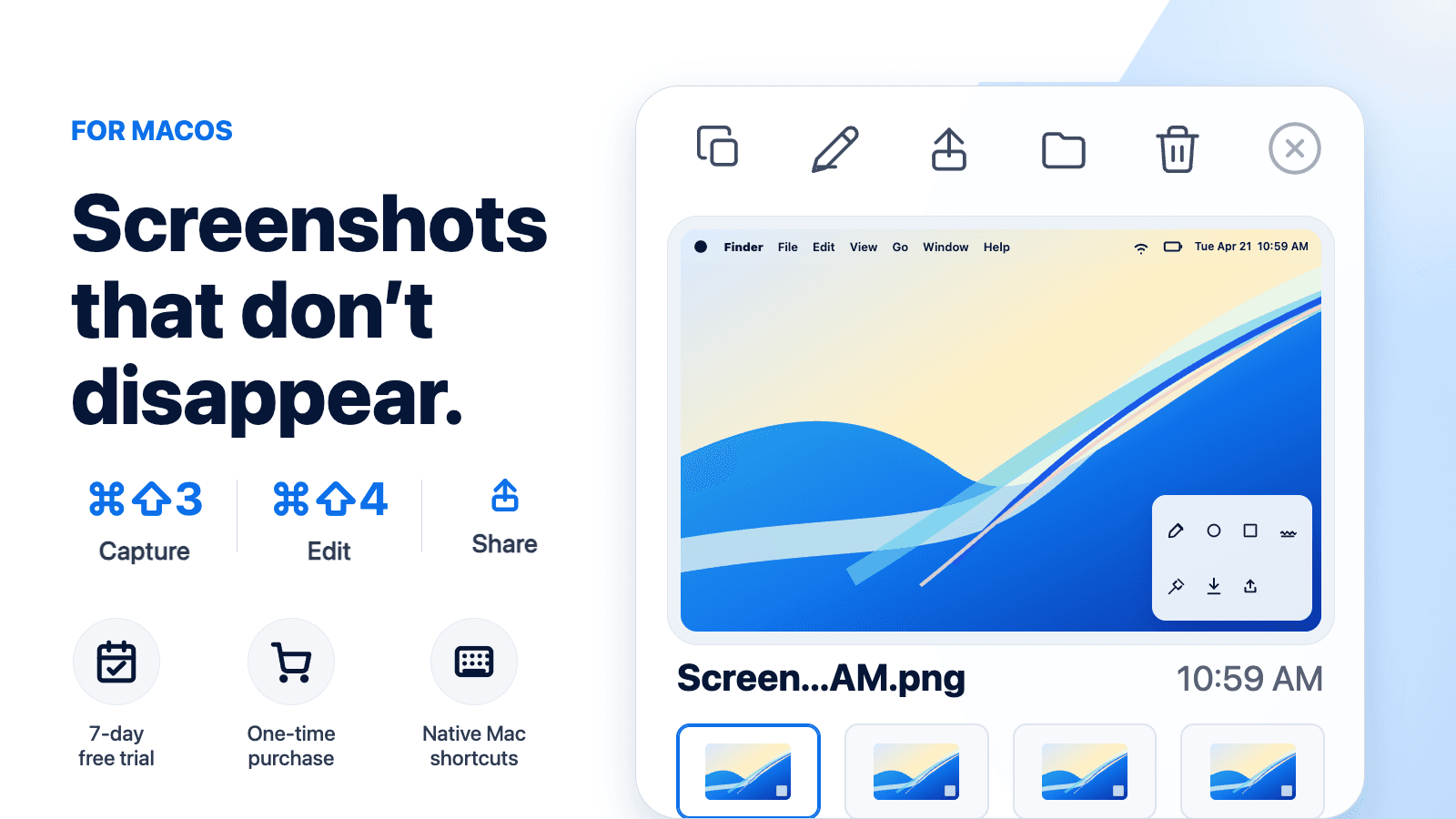
Use this page when you want one place to choose the right Mac capture shortcut for the job. After the shortcut creates the screenshot, CommandShot fits the next step by keeping recent captures ready for copying, editing, renaming, dragging, sharing, or deleting.
The essential Mac screenshot shortcuts
| Shortcut | What it does | Best for |
|---|---|---|
Command + Shift + 3 | Captures the whole screen | Full desktop context |
Command + Shift + 4 | Lets you select part of the screen | Focused screenshots |
Command + Shift + 4, then Space | Captures one window | Clean app-window screenshots |
Command + Shift + 5 | Opens the Screenshot toolbar | Options, timers, screen recording |
Control + Command + Shift + 4 | Copies a selected area | Fast paste into chat or docs |
Apple’s Mac screenshot guide covers these built-in options, including full-screen, selected-area, and window captures.
Which shortcut should you use most?
For everyday work, Command + Shift + 4 is usually the best default. It lets you capture only what matters.
Use it for:
- error messages
- specific UI states
- settings panels
- receipts and confirmations
- charts or sections of a page
- visual feedback for teammates
Full-screen screenshots are useful when context matters, but they often include too much unrelated information.
How to copy instead of save
If you want to paste a screenshot directly into another app, add Control.
For example:
Control + Command + Shift + 3copies the whole screenControl + Command + Shift + 4copies a selected area
Then paste with Command + V.
For more detail, read how to copy a screenshot to clipboard on Mac.
How to capture one window
Use Command + Shift + 4, then press Space.
Your cursor changes to a camera pointer. Hover over the window you want, then click. This is cleaner than dragging around the window manually because macOS captures the window itself.
How to open screenshot options
Use Command + Shift + 5.
The toolbar is best when you need to:
- choose where screenshots are saved
- set a timer
- record the screen
- turn the floating thumbnail on or off
- switch between capture modes visually
If you are not sure where your screenshots are going, the toolbar is the first place to check.
The shortcut does not solve the whole workflow
The capture shortcut is only the first step. The next step is usually the one that slows people down:
- finding the screenshot
- renaming it
- copying it
- editing it
- dragging it into another app
- deleting it after sending
CommandShot is built for that post-capture moment. You keep using the Mac shortcuts, and CommandShot keeps the recent screenshot ready for the next action.
Final takeaway
Learn these three first: Command + Shift + 3, Command + Shift + 4, and Command + Shift + 5.
Once those feel natural, add Control when you want clipboard screenshots. That gives you the core Mac screenshot workflow without needing to memorize every option at once.